As I shared in parts one and two of this commentary, observations regarding many of the current churches, across faith denominations, John E. Johnson asks “has the church become obsolete?” It appears this is valid for many communities and church congregations. This has been authenticated as I have spent months visiting churches, hopeful I could locate a church with even a portion of the format from the churches where I spent countless hours serving in ministries.
I have noted churches which have darkened sanctuaries while flashing lights and loud music dominate the environment. Additionally most of these “gatherings” don’t advocate bringing or using bibles, as that is “old fashioned” and passe. It’s now more convenient to just “read” from an overhead screen. In the book, The Great Dechurching by Graham and Davis, their research says, “we are currently in the middle of the largest and fastest-growing shift in our country-the decline of the church.”
This is evident when persons that desire a traditional mode of worship are unsuccessful in locating churches still offering this. Even the church where I have held my membership for the past several years, has adapted many aspects of the current culture of irreverence.
Pastor Kent Sweatman noted, “in one or two generations, a way of doing church that had endured and developed over decades…even centuries…has been dropped, dumped and forgotten. Music directors have been replaced by multiple singers collectively known as the “praise team.” Preachers no longer dress in suits. If they are not clad in t-shirts and faded jeans, they wear pleated slacks and golf shirts.”
He continued, “the move from one type of worship to the other created no small controversy in the evangelical church…we have to appeal to the world on its level in order to reach the world.” Why must we conform to the world?
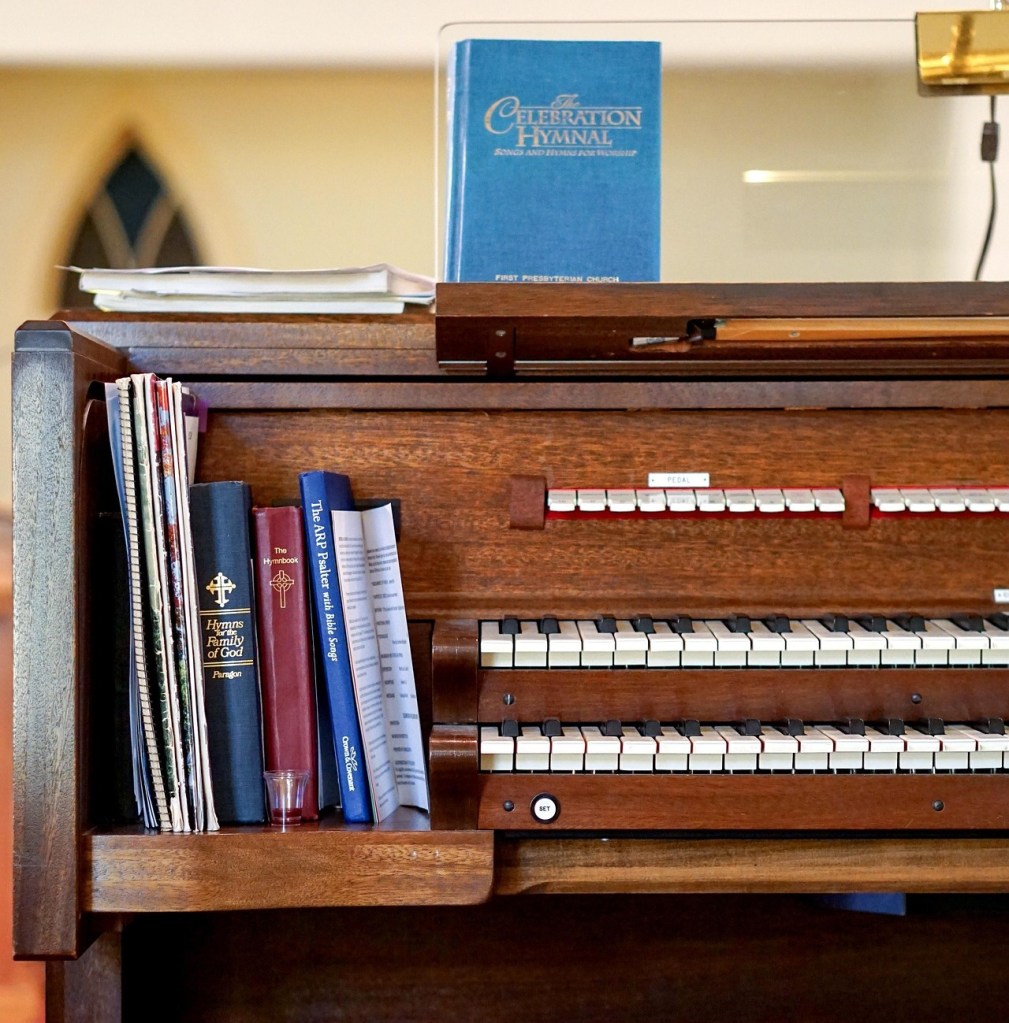
Dr. Howell Burkhead dittoed the sentiments of many of us which yearn for the traditional worship music of earlier churches. When we sing hymns such as “Holy, Holy, Holy” and “Great is Thy Faithfulness”, “these not only enable the worshipper to sing to God, but also include rich content about God…which, again, helps establish biblical truth in the heart and mind…an informative…exercise would be to go through a hymn book…such a search would reveal an incredibly vast storehouse of thorough Bible doctrine.”
When praise songs repeat the same lyric multiple times while the jean clad, swaying singers are performing on stage, are they truly singing “to the Lord?” or are they performing to an audience which has no understanding of the words nor the message they are trying to convey?
Often the words of the “rock style” music of the praise teams are inaudible. If not for the printed words on the projection screens, those in the congregation would have no understanding if they were singing in a concert hall or church.
When I sing lyrics in hymns, I know there is a message to “listening ears.” Dr. Burkhead is valid in his words, “and when we have finally lost the great hymns, we will have lost a very powerful method of teaching doctrine in the church.” Colossians 3:16 NKJ, “let the word of the Christ dwell in you richly in all wisdom…in psalms and hymns and spiritual songs, singing with grace in your hearts to the Lord.”